Context and responsibility. 10 minutes with Max Gorbatsky and Viktoria Bavykina.
Max Gorbatsky and Viktoria Bavykina are Ukrainian curators. In 2020, in Kyiv, they co-founded the non-profit organization Ukrainian Photography with the aim of supporting the development of photography in Ukraine through exhibition projects, research, and publications. They also developed the online platform Ukrainian Photographies, dedicated to international research on Ukrainian photography.
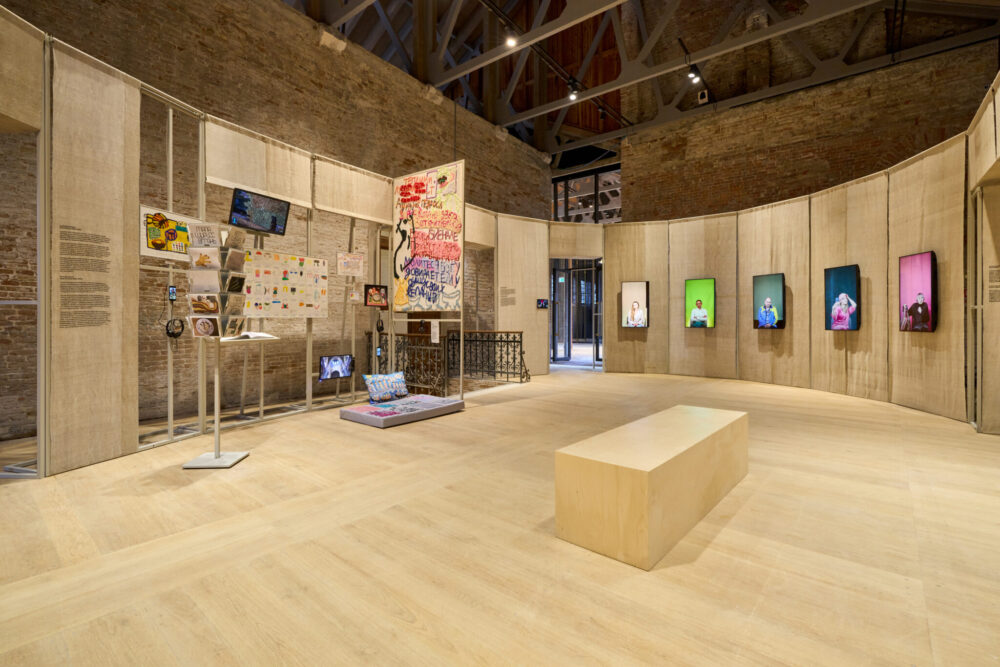
As curators, they have worked together on the Ukrainian National Pavilion at the 60th International Art Exhibition of La Biennale di Venezia (2024), the HOME programme for EuroFestival/Eurovision 2023 in the Liverpool City Region, as well as exhibitions at BredaPhoto Festival, Stills Centre for Photography in Edinburgh, and the UK Parliament in London.
While Gorbatsky is a curator at Open Eye Gallery in Liverpool, UK, Bavykina focuses more on research. In 2024, she co-organised a symposium on Ukrainian photography at the University of Salford and co-curated several exhibitions dedicated to the Ukrainian Photographic Alternative, an informal group that united over 100 photographers from across Ukraine. In 2020, Bavykina defended her PhD in the sociology of culture at V. N. Karazin Kharkiv National University.
What do you do on a daily basis, and what role does photography play in it?
Max:
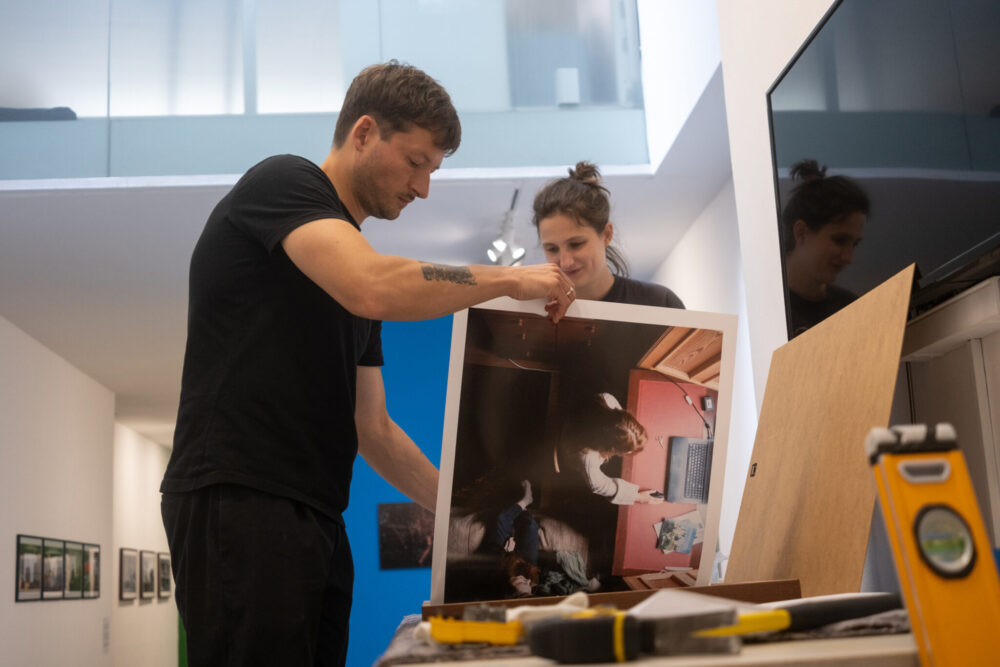
I am a full-time curator at Open Eye Gallery, a public photography gallery in Liverpool, UK. Photography takes up quite a lot of my time—though perhaps less than you might think. Most of my days are filled with emails, meetings with partners and the team, and all the practical tasks that keep a gallery running, as well as making new plans and implementing existing ones.
Viktoria:
I am currently a research fellow at the Institute for Advanced Studies in the Humanities (IASH), which is part of the University of Edinburgh. My research focuses on the so-called Russian avant-garde and the European institutions and academies that shaped this canon, constructing it almost exclusively around “Russianness” while absorbing and overshadowing the contributions of Ukrainian, Latvian, Lithuanian, and other artists. In addition, I work as an Associate Curator at Open Eye Gallery. Together with Max, I also run an archive dedicated to Ukrainian photography, which we are now planning to expand to include a broader Eastern European context.
You are currently working together on a larger project. Can you reveal anything more about it?
Max:
Yes, we are always working on something together, regardless of our day jobs. The project we are currently developing is part of Open Eye Gallery’s long-term programme. It focuses on decolonial approaches to working with archives across Eastern Europe. The idea is to create an evolving project in which local artists work with local archives in different countries. The touring exhibition will open at Open Eye Gallery in April 2026 and will then travel to our partners’ venues abroad. This is why we have recently been in Latvia and Finland, and are now in Poland, with plans to visit other Baltic countries later this year.
Viktoria:
The project is partly a continuation of my research at IASH, exploring archives and existing knowledge through a decolonial lens. I am interested in examining what we actually know and why, what gaps exist within this knowledge, and how these structures of knowing shape and influence visual narratives. Working with photographic archives—whether family, institutional, or professional—offers an opportunity not only to analyse the visual tendencies and photographic approaches of a particular period, but also to engage with a broader context: the historical events that may have shaped the formation of these archives, as well as the power narratives and ideologies that have influenced visual culture.
You visited Latvia at the beginning of September—what were your impressions? Did you discover anything special about photography in Latvia?
Max:
As Ukrainians, we have always had some basic knowledge of Latvian photography, as there have been long-standing connections between our countries. However, we were really impressed by the archival work we encountered and by the strong interest in photography among researchers and institutions. We discovered several wonderful collections, including Zenta Dzividzinska’s archive, which was introduced to us by Līga Goldberga at the National Library, as well as the fascinating archive of a photography studio in Strenči, which we encountered at the Latvian Museum of Photography thanks to Džūlija Rodenkirhena.
Viktoria:
This is not directly related to photography, but on the first day we met Kristīne Milere from the Art Museum RIGA BOURSE, and she is doing incredible work there—it truly inspired me. Overall, I was deeply impressed by what ISSP and the Latvian Centre for Contemporary Art are doing. These self-organised initiatives, driven by the personal effort, faith, persistence, and courage of their founders, have become powerful forces that go far beyond working with local photography and the arts. I was especially pleased to see that both institutions are actively collaborating with Ukrainian artists, and I sincerely hope to see many more such collaborations in the future.
How do you see the relationship between photography and politics?
Max:
Very direct. It’s very direct. Of course, photography can be abstract or purely aesthetic, but at its core it is deeply connected to society, to real people—and therefore to politics, as all art is in one way or another. We are living in very challenging times, and I think this is a moment when photographers and artists working with photography cannot turn away from or avoid politics.
Viktoria:
I share a very similar view on the relationship between art and politics, believing that all art is political. Any form of artistic expression—whether a series of photographs, an exhibition, a catalogue, or an art book—is part of the public narrative and inevitably influences it. Art is, by its very nature, a public act. Even if it does not belong to popular culture, it still has an impact; it speaks about or ignores particular ideas or events. For me, viewing art as political is, above all, about the responsibility of those who work with it.
What do you look for in a photograph to make it speak to you personally?
Max:
It depends on the type of photograph. A historical archival print might interest me through its formal qualities or the way it captures a particular time—who is in it, how it was made, or what story it reveals. A contemporary artwork, on the other hand, draws me in if it makes me think, surprises me with the author’s perspective, or is so subtle and nuanced that it gives me a small thrill.
Viktoria:
Continuing my previous thought, I suppose I am also searching for this sense of responsibility. Of course, even though it exists among photographers and artists, not everyone is willing to accept or acknowledge it. It seems to me that when an author does take this step, it often becomes visible in their art: they become more attentive to what they do, how they speak about it, the contexts in which they present it, their audience, and what they communicate to them. They also become more aware of the field in which they work. At that point, art ceases to be merely an act of creation—it becomes part of political and social life.
What other creative plans do you have for the future, apart from the project you told me about?
Max:
Our main plan is to secure proper support for the ukrainianphotographies.org platform and continue developing it. So far, we have been running it entirely on our own as volunteers. We would like to invite critics, art historians, and curators from Latvia and beyond to contribute by writing about Ukrainian or Eastern European photography—and if you are not sure what to write about, just get in touch with us.
At Open Eye Gallery, we are also working on several interesting projects. The first is our Climate Lab, which takes place every other year and brings together artists and researchers developing projects around environmental themes. After that, we will launch the first exhibition from our new programme—the one that brought us to Riga. It will focus on contemporary decolonial perspectives on working with photo archives in Ukraine and Eastern Europe, and we hope to include work from Latvia in the exhibition.
Viktoria:
I would like to add more about our existing project, which we plan to update and reshape soon: the Ukrainian Photographies platform (ukrainianphotographies.org). It began as an immediate response to increase the visibility of Ukrainian photographers at the start of the full-scale Russian invasion. We organised online exhibitions, published articles, and held a portfolio review in collaboration with Stills Gallery in Edinburgh. From the very beginning, the project was entirely volunteer-driven—which made it vibrant but also somewhat chaotic, without a clear long-term structure or programme.
Over time, we realised that this reactive approach worked well at the moment, but to have a lasting impact we needed to make the project more sustainable and systematic. Our goal now is to develop it into a stable platform for research, dialogue, and collaboration. We also want to expand its geographical scope and engage in conversations about photography across a broader Eastern European context—exploring the traditions of different countries and building connections between them.
While Ukrainian photography remains our main focus, we are equally interested in addressing the lack of shared knowledge about the photographic histories of countries that share similar pasts and traumas. There are remarkable photography archives and vibrant contemporary scenes in Latvia, Lithuania, Estonia, Poland, and many other countries, as well as in Ukraine. We hope that by encouraging research, exchange, and collaboration, these stories can begin to circulate more freely and be seen as part of a connected narrative.