Autumn photography news in the Baltics

19.09.2026 – 17.01.2027, Fotografiska Tallinn
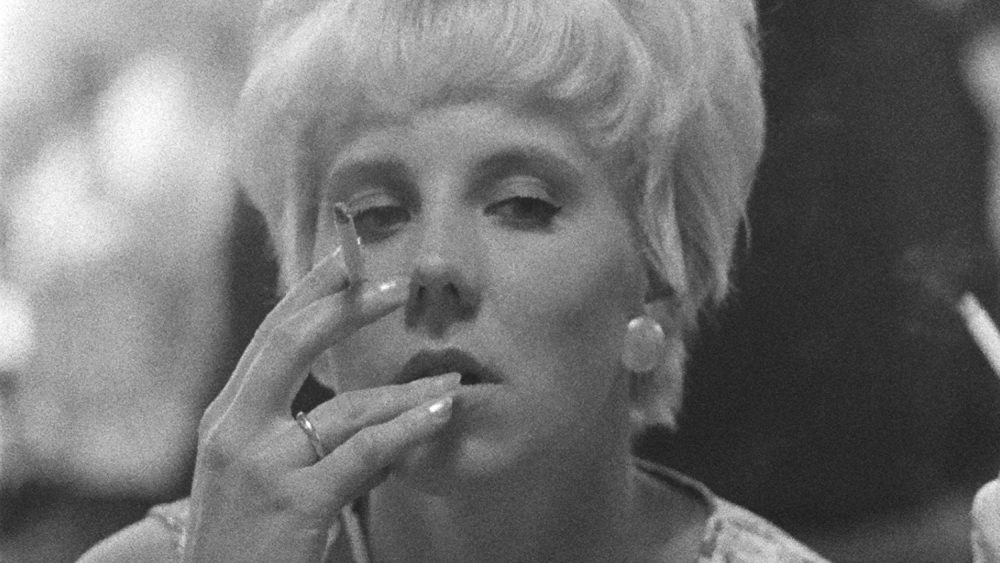
Vivian Maier (1926–2009) is one of the most enigmatic figures in the history of photography. Her contribution to the medium was discovered only after her death, yet she is now regarded as one of the greatest street photographers of the twentieth century.
Maier belonged to the invisible working-class at the height of the American dream, allowing her to only be a witness to it. It took a long time for her work to see the light and to be revealed. Nearly a century later, she figures in the history of photography alongside the greatest masters of the twentieth century.
Vivian Maier: Unseen Work explores Maier’s oeuvre from the early 1950s to the mid-1980s through approximately 200 works, including vintage and contemporary prints, color and black-and-white photographs, Super 8 films, audio recordings, and contact sheets presented exclusively in the Tallinn exhibition. The exhibition offers a comprehensive view of this dense, rich, and multilayered archive, providing a fascinating testimony to post-war America and the darker side of the American Dream.

09.10.2026 – 07.02.2027, Fotografiska Tallinn
Bosnian artist Šejla Kamerić explores the burdens passed down to women through generations and the possibility of breaking free from them and reclaiming one’s own story. Through photography, sculpture, installation, and sound, Kamerić examines memory, identity, and belonging, using her own body as a site of resistance and self-determination. The exhibition title refers both to personal experience and to the former Yugoslavia, or “ex-YU” – a place that has politically ceased to exist but continues to live on in cultural memory – asking what we carry with us from the past, what we are able to leave behind, and what remains.

09.10.2027 – 07.02.2027, Fotografiska Tallinn
Estonian artist and photographer Heikki Leis’s solo exhibition Storm Before the Silence explores the primal connection between humans and water, and how our bodies, movement, and habitual ways of seeing shift when submerged. In the photographic series Streaming Lines and Rippled Surfaces, bodies twirl, spin, flex, and intertwine in water, while the ripples and flickering of its surface distort faces and familiar forms. Water blurs boundaries and momentarily shakes the body free of physical and social constraints, creating space for lightness, movement, and freedom. In both series, water is more than a backdrop or decorative element – it becomes an active co-author of the works, shaping bodies, faces, and their movement. The exhibition features 23 photographs and one video, accompanied by a soundscape created especially for the exhibition.

05.09.2026 — 25.10.2026, Punctum Gallery
Marge Monko (1976) is a well-known name on the Estonian art scene, whose work has, over the course of years, moved along the border between documentary and conceptual photography, persistently examining how the personal and the political, the intimate and the social, influence one another. This exhibition turns its gaze more directly than before toward the artist’s own life: an artist accustomed to watching others here lets the viewer see her own inner world. The photographs on display deal with something that is changing, but has not yet completely disappeared, says Emel-Elizabeth Tuulik.

- Janno Bergmann, MICROGENESIS and Joonas Ahtikallio solo exhibition
02.09.2026 — 03.10.2026, Endla Theatre Gallery, Pärnu
The series MICROGENESIS by Janno Bergmann is created using experimental methods characteristic of cameraless photography, combining lumen printing and chemigram techniques. Lumen printing harnesses the effects of light and time on photosensitive paper, capturing images without chemical development, while chemigrams open up an unpredictable dialogue between material and chemistry, where light, liquids, and time generate unique patterns.
The exhibition by finnish artist Joonas Ahtikallio features a series of images created by the artist during his residency in Pärnu. Exploring the layers of the mind and bodily memory through cameraless photography, he creates abstract portraits in the darkroom using live models, paper masks, and plant-based chemical processes. While he directs the framing and structure, he steps back from full control to allow the properties of the plants and chance to shape the final image.

03.09.2026 – 01.12.2026, University of Tartu Narva College Gallery
The international photography exhibition All Quiet on the Eastern Border presents the current outcomes of ongoing documentary photography projects by Luca Berti, Anthony Haughey and Raphaël Gianelli-Meriano. The exhibition approaches the eastern border of Europe and NATO not only as a geographical line, but also as a historical, cultural, psychological, and perceptual condition.
Through the work of the three artists, the exhibition addresses both physical and invisible borders that continue to live on in people, language, memory, emotions, and the polarizing division between “us” and “them.” In the context of Narva, this becomes especially meaningful, as the border is part of the city’s everyday urban and communal experience. Due to Russia’s full-scale war in Ukraine, the eastern border of the Baltic states has become a subject of increased political and public attention. The exhibition creates a space for dialogue and for different perspectives and experiences to meet.
LITHUANIA

16.09.2026 – 25.10.2026, Museum of Photography, Šiauliai
The exhibition Virgilijus Šonta: The answer, my friend, is blowin’ in the wind is the first comprehensive retrospective presentation of the Lithuanian photographer Virgilijus Šonta (1952–1992).
The curators Margarita Matulytė and Gintaras Česonis present a selection of more than 200 of the artist’s works, complete with the biographical documents that provide insight into the artist’s enigmatic yet exceptionally sensitive and dramatic personality. The retrospect has been arranged in collaboration with the artist’s family and the Kaunas Photography Gallery. For the first time, the artwork has been drawn from all of the key collections.

08.09.2026 – 03.10.2026, Vilnius Photography Gallery
Formally, one could say that Boris Taskov represents the classical school of photography, as he works with an analogue camera and prints his photographs on traditional silver gelatin paper. Yet, statistically speaking, B. Taskov’s work emerges in a distinctive stylistic ‘in-between’, as it cannot be confined either to the frameworks of humanist, psychological photography or to the role of an attentive observer of street photography. Rather, his works suggest an observation of insignificant shifts of light and shadow as a state of solitude and of a figure distanced from the main action. In a way, Taskov could be called a contemporary Algimantas Kunčius, in whose work the essential elements of photography – light and the zone of sharpness – become the main protagonists of the photographs.
Five years ago, the Bulgarian-born photographer, who had lived and worked in Lithuania, moved to Sicily. Here, solitude and attention to the slow passage of time, a particular worldview, and a form of light unique to the region have become increasingly pronounced in his artistic approach.

28.08.2026 – 24.09.2026, Kaunas Photography Gallery
Blind Cats explores the increasingly blurred boundaries between entertainment, violence, and propaganda. Games, social platforms, and other digital environments today don’t just offer entertainment — they can become tools that shape our attitudes toward violence, war, and our very perception of reality. In the exhibition, Morkevičius asks what happens when a game is no longer just a game, and its consequences spill over into reality.
Blind Cats was created as part of the Soft Photography research project, carried out at the Master of Photography program of ECAL / University of Art and Design Lausanne, supported by HES-SO.

09.09.2026 – 09.10.2026, Conference Hall of the Tuskulėnai Memorial, Vilnius
The exhibition tells the story of the price of bread during the Soviet era – its shortage, queues, deprivation and what it really meant to obtain bread for everyday life.
“After returning from exile, even many years later, there were always two linen bags of dried bread in our home: one with black bread and the other with white bread. Around 1970, when we were already living in Giedraičiai, we asked why they were needed. Our grandmother Konstancija mysteriously replied that no one starves to death when they have a loaf of bread, and that those bags, God forbid, could come in very handy and even save a life. And no further comments…”
LATVIA

10.09.2026 – 29.10.2026, ISSP Gallery Riga
From September 10 until October 29 the ISSP Gallery will present an exhibition Things Return Quietly by Lithuanian photographer Vytautas Kumža. Vytautas Kumža’s works begin with objects that become strangely charged when removed from their familiar surroundings. A domestic fragment leans towards something that seems to resist it. Familiar things begin to behave strangely.
Working across photography and sculpture, in Things Return Quietly Kumža places objects in carefully constructed relationships that appear precise and aestheticized, yet remain psychologically unstable. Objects lean towards one another, hang precariously, interrupt the photographic image or extend beyond its frame. Their relationships suggest intimacy, attraction, refusal or threat, without settling into any single meaning.

25.09.2026 – 27.12.2026, Ogre Museum of History and Art
“In recent years, public discussions about the closure of small rural schools have become increasingly common in Latvia. These closures motivated me to return to my former school, with the central image of the photographs being the school building, constructed in 1976—which is celebrating its 50th anniversary this year—and the emotional impact it has had on me. I was never left behind at school after classes ended, yet, speaking in dramatic terms, some unfinished internal process—or necessity—compelled me to re-engage in a dialogue with it, describing the inner process of this work’s creation as the construction of the school and my memories,” the artist explains regarding the exhibition’s concept.
The school environment created a sense of insecurity and alienation in the artist, which persisted throughout her subsequent school years until she graduated. The exhibition AFTER SCHOOL highlights the alienation experienced at school, a student’s relationship with the school environment, and experiences of bullying, while also prompting reflection on how these experiences can affect a person even in adulthood. Accompanying events are also planned during the exhibition, which may be particularly relevant to students and teachers as the new school year begins.

08.10.2026, M/House of Jazz, A. Briāna iela 9, Riga
As part of M/House of Jazz’s sixth anniversary week, on October 8 at 19.00, we will open Latvijas Džezs (Jazz of Latvia), an exhibition of large-format analogue portraits by photographer Haralds Vecvagars.
Over the course of five months, Vecvagars photographed more than 30 Latvian jazz musicians and industry professionals, creating a visual document of the Latvian jazz scene today. The portraits were made using a large-format analogue camera — a process in which each frame is carefully prepared and becomes a record of a specific moment in time.
The exhibition continues Vecvagars’ long-standing interest in portraiture, this time focusing on the people who perform, compose, produce, organise, and shape Latvia’s jazz scene. The opening evening will be an opportunity to meet the photographer and the people portrayed, while continuing M/House of Jazz’s sixth anniversary week together.