Nothing will stop us – Paris Photo after the protests
From 12 to 15 November, Paris hosted the 29th edition of the annual Paris Photo fair. This year, it took place against a backdrop of protests. The student demonstrations in mid-October against the education system subsequently developed into a broader movement against the cost of living and inequality. The latest protests took place just four days before the fair opened. Many shop and bank windows in Paris are still boarded up – in some cases as a result of looting during the protests, in others as a precaution against possible future attacks.
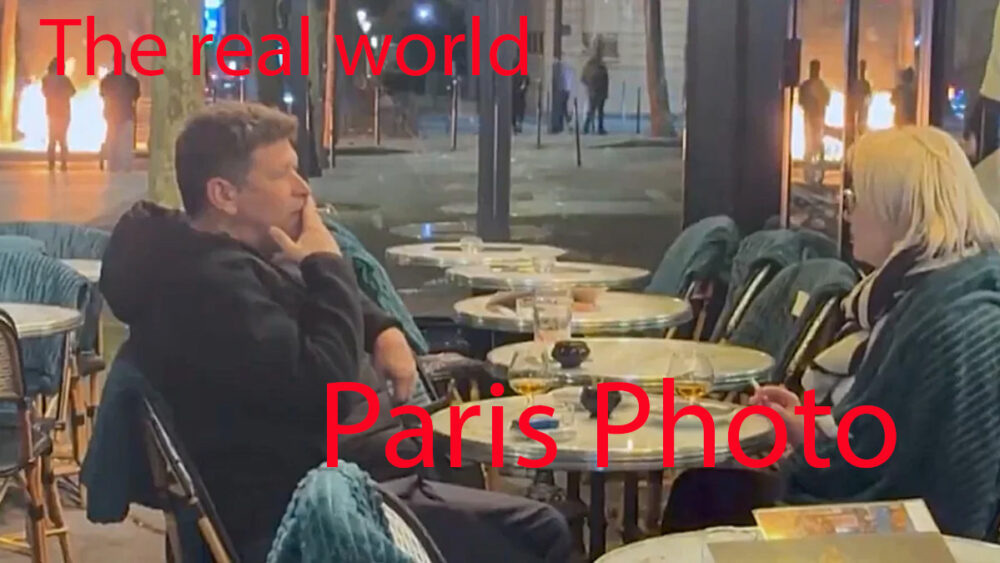
Less than a week before Paris Photo opened, artist Adam Broomberg called on the fair’s organisers, via his Instagram account, to show solidarity with the protesters and cancel the event. “We are dancing on a volcano,” he wrote, asking whether sales were more important than solidarity at this critical moment in history. Broomberg described a situation in which French workers and students were taking to the streets to demand decent wages and fair taxation, only to face police violence. He referred to the May 1968 protests and strikes, when the Cannes Film Festival was suspended in solidarity with French students and striking workers. Significantly, Art Basel Paris, which was also taking place at the Grand Palais, was brought to an early close the day before the 24 October protests. Protesters had called for the Grand Palais to be reclaimed from the wealthy elite, highlighting inequality in access to public spaces and culture. Art Basel closed its doors two days early due to security concerns, rather than as an expression of solidarity with the protesters. Broomberg’s appeal went unheard by the organisers of Paris Photo, and the fair went ahead as planned. In this context, images and videos from the 17 October protests, which attracted widespread media attention, come to mind – a couple sitting nonchalantly in a café while the streets of Paris burn. On the one hand, this illustrates the desire to maintain a semblance of normality even in times of crisis, but on the other, it reveals an avoidance of uncomfortable reality.
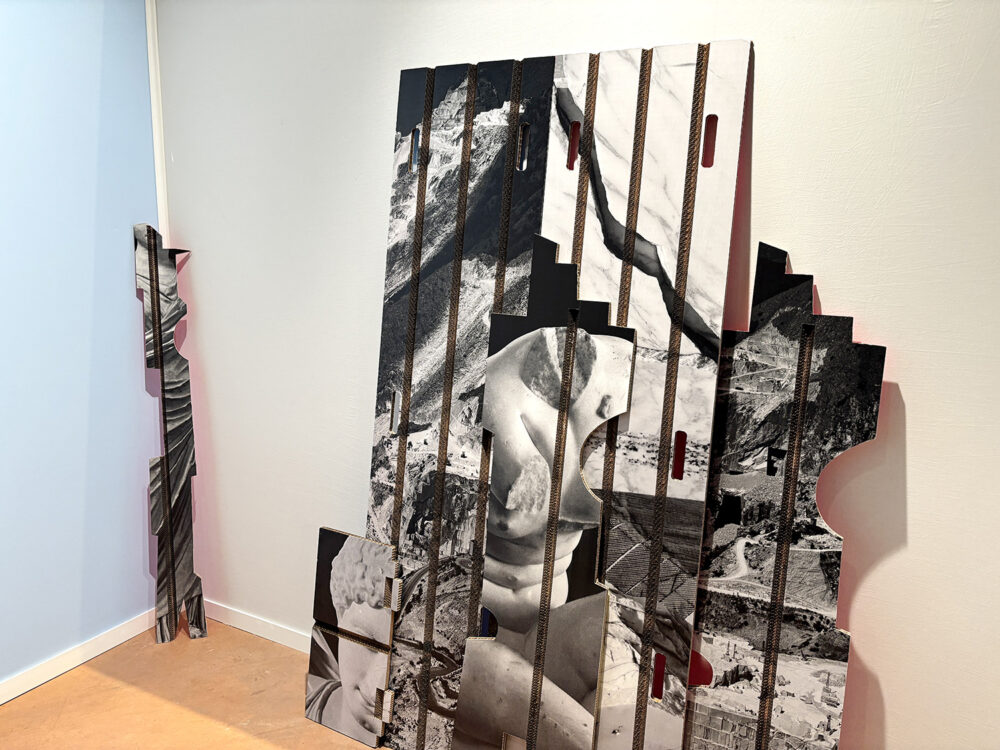
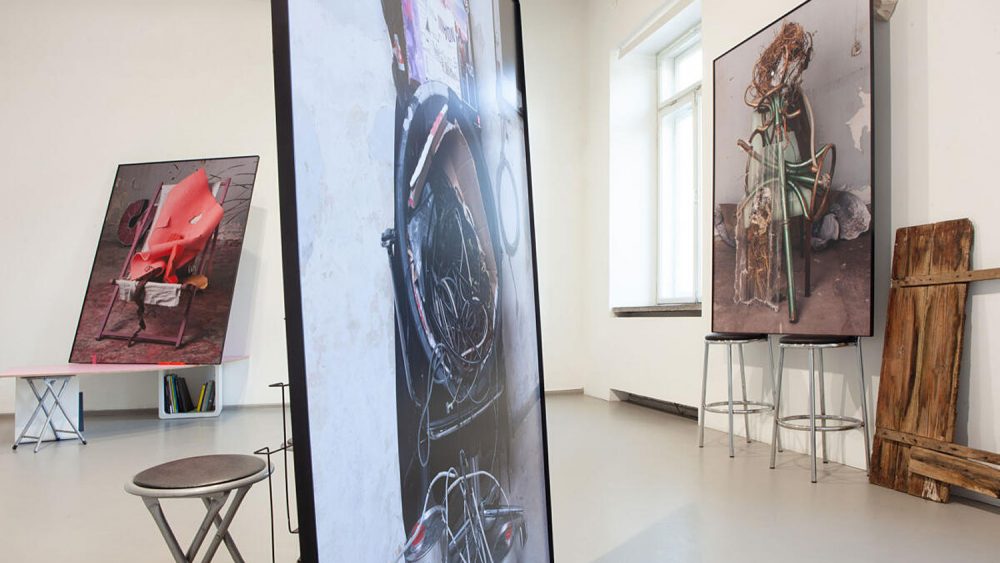
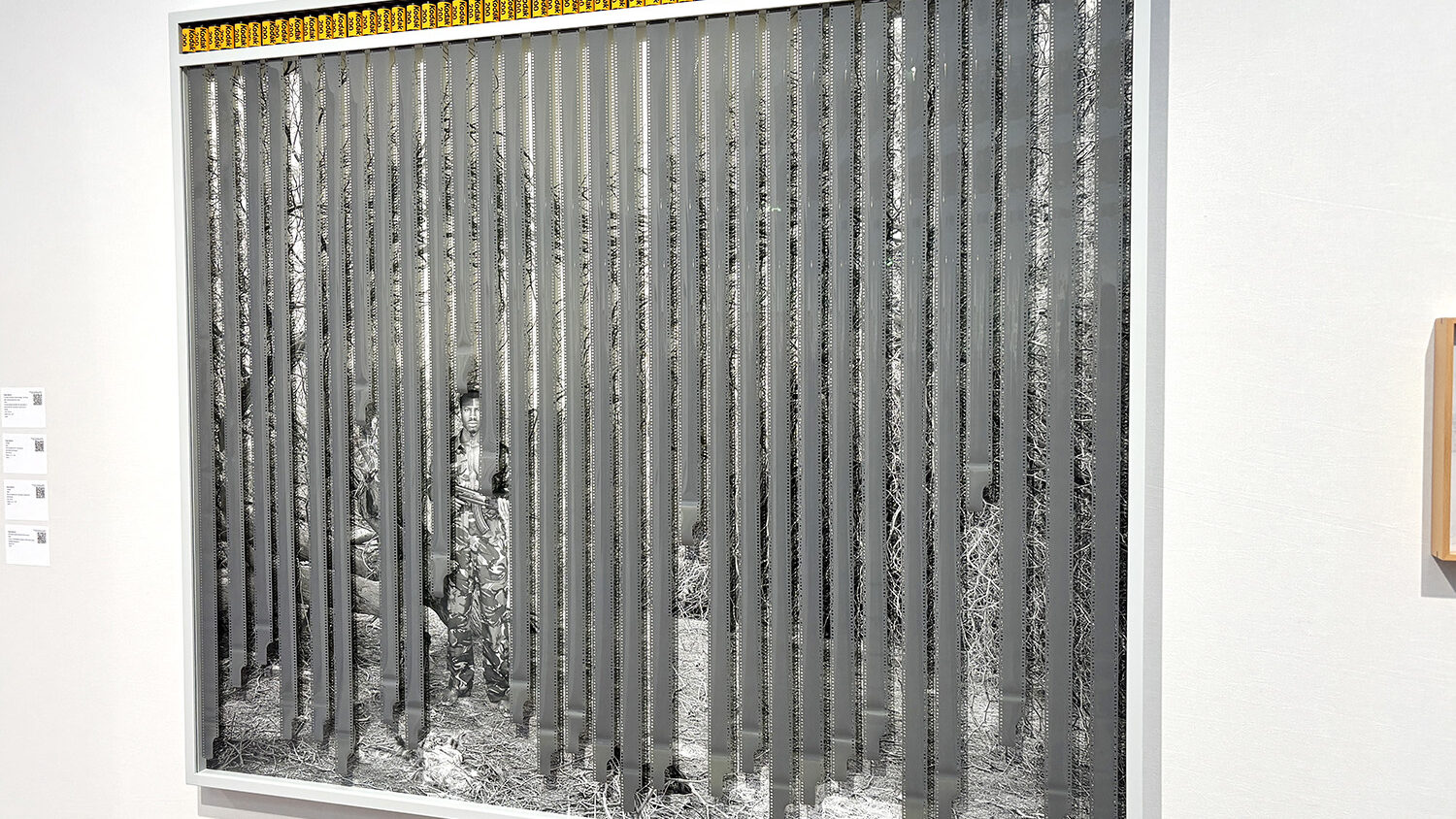
There is hardly any uncomfortable reality to be found at the Paris Photo booths. Documentary photography, for the most part, serves as a historical record of events long past. This year, the dominant trend is what might be described as craft-based photography – various archaic analogue techniques, with things stitched, cut, torn, glued and drawn. The content of such works, which seek to move closer to graphic art, installation and painting, is largely abstract or figurative. It seems that the main criterion of our time is simply that something should look pretty.
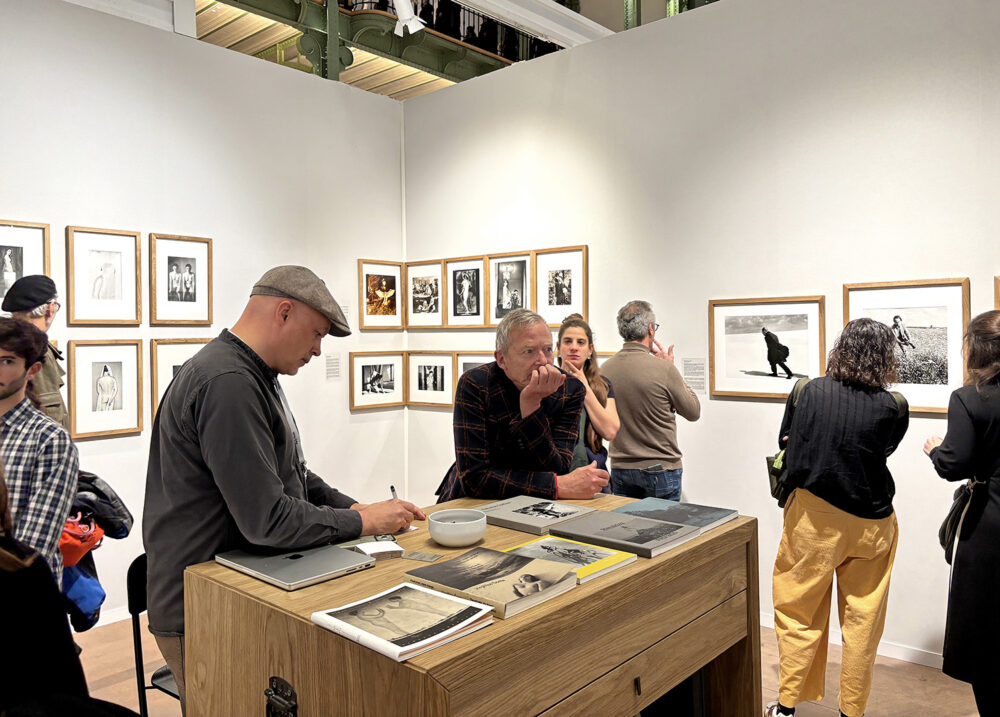
The Kaunas Photography Gallery presents black-and-white Lithuanian photography from the last century, while Estonia is represented by the Kogo Gallery in Tartu, with Kristina Ollek’s works incorporating sea salt. Interestingly, I came across photographs featuring salt crystals at least two other booths. As usual, Latvia was represented by neither an artist nor a gallery.
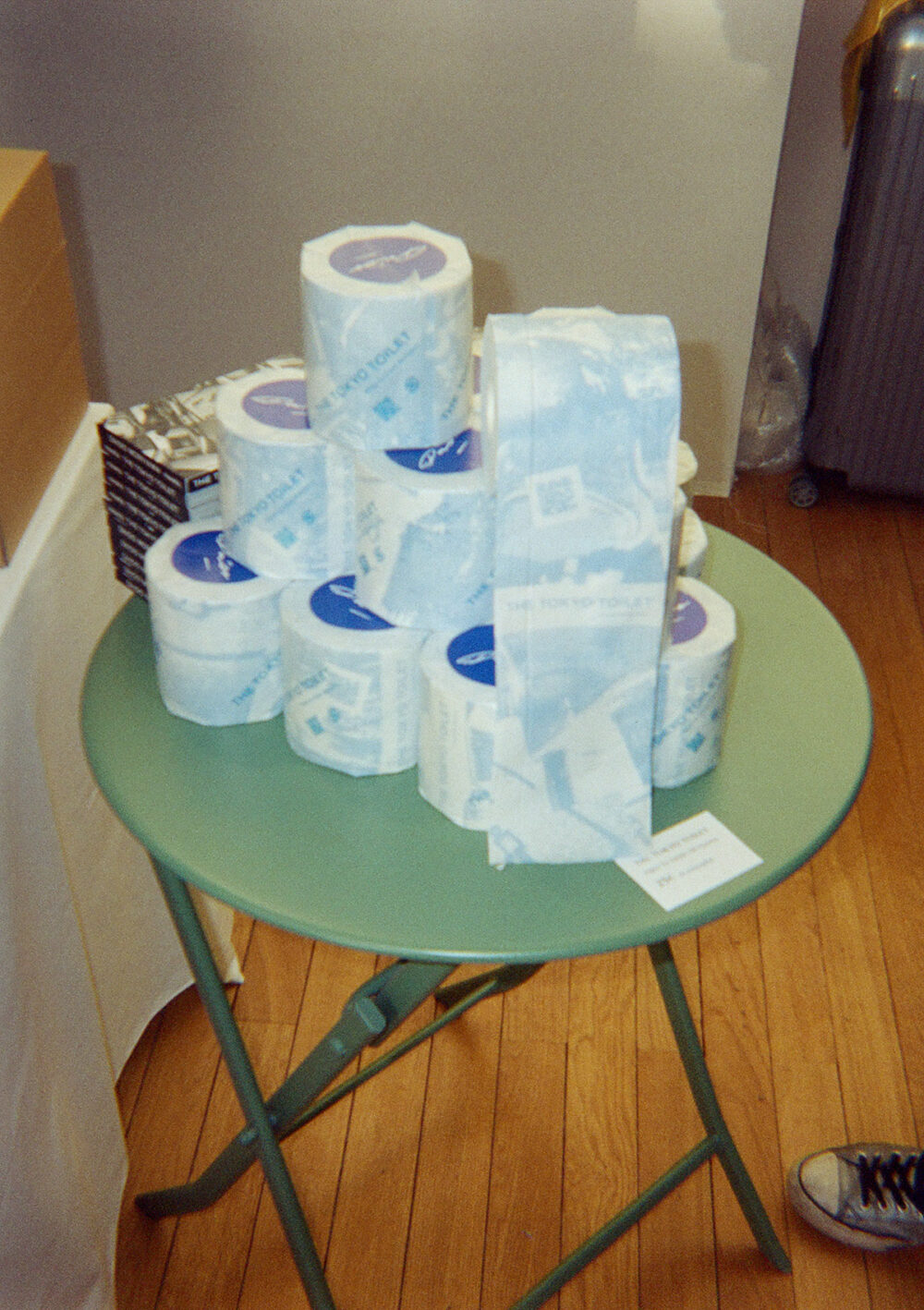
This year marks 200 years since the invention of photography, a milestone also highlighted at the fair. Japanese photographer Daido Moriyama has even produced yet another publication dedicated to Joseph Nicéphore Niépce’s first image, taken through the window of his workshop in 1826. However, what caught my attention was the toilet paper printed with Moriyama’s photographs, displayed on the table right next to it. One roll costs €25. Although the work documents public toilets in Japan, I was more inclined to see it as a symbol of elitism, affluence and the gulf between impoverished artists, whose social status is much the same as that of most protesters, and the successful ones whose works fetch astronomical sums. Paris Photo is a platform for superstars who have reached such heights that even their shit is worth its weight in gold. In this context, the protesters’ slogan Eat the Rich applies just as much to the Paris Photo crowd, although one might assume that this photography event is not quite as elitist as Art Basel.
Paris Photo sends a signal that photography is becoming less political and socially engaged, and more decorative, escapist and romantic. And less photorealistic, too. Historically, photography has been one of the most important tools for documenting wars, social inequality, police violence, protests and human rights violations. It is therefore sad that, 200 years after the medium was invented, it has become so detached from what is happening in the world today.